


Pelton Turbine
Inhouse product
-
 Rs. 1.00
 -
Rs. 101,700.00
-
Rs. 66,444.00
Rs. 67,800.00
Reviews & Ratings
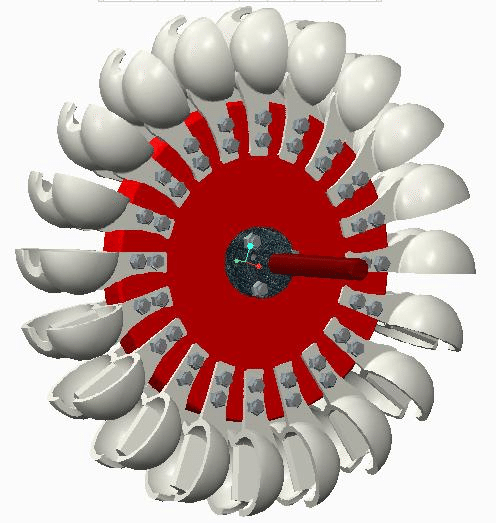
The Pelton turbine is a type of impulse water turbine used primarily for high-head, low-flow hydroelectric power generation. Invented by Lester Allan Pelton in the 1870s, it is one of the most efficient types of water turbines for converting the kinetic energy of water into mechanical energy.
Pelton turbines operate by using one or more jets of high-velocity water directed tangentially onto the buckets (or cups) mounted around the periphery of a runner. These buckets are specially designed with a double hemispherical shape, split by a sharp ridge, which allows the water jet to hit the center, split in two, and exit sideways—minimizing energy loss and optimizing energy transfer.
The turbine is typically used in hydropower plants where the water head (vertical drop) exceeds 250 meters, and where water flow is relatively low. Due to its impulse action, the Pelton turbine does not require the entire runner to be immersed in water. Instead, the jets strike the buckets in open air, allowing efficient energy transfer and easy maintenance.
Key Features of a Pelton Turbine:
-
Ideal for high-head applications (250 to 1800 meters)
-
Operates on impulse principle (uses kinetic energy of water)
-
High efficiency (up to 90% under ideal conditions)
-
Composed of runner, buckets, nozzles, casing, and deflectors
-
Mostly used in mountainous regions and remote hydropower sites
Pelton turbines are widely used across the globe for renewable energy generation and are favored for their simplicity, durability, and effectiveness in harnessing energy from high-head water sources.
Frequently Bought Products
-
Rs. 1.00
-
Rs. 101,700.00
-
Rs. 66,444.00
Rs. 67,800.00
Sindhu Enertech is a pioneering e-commerce platform based in Nepal, dedicated to revolutionizing the way buyers and sellers connect. Powered by an innovative online bidding mechanism, our platform brings transparency, efficiency, and competitive advantage to a wide array of product categories—ranging from energy equipment and industrial components to consumer goods and beyond.